Table Of Content

This is best saved for unconventional or more abstract designs. With this type of balance, elements don’t have to be perfectly symmetrical, but they may end up that way naturally since everything radiates out from one place. Logopoppin is a graphic design agency that specializes in logo designing, web development, video production and advanced branding services. We love to innovate businesses with new age technologies, allowing them to improve their visual reputation. Balancing a design using color is one of the simplest way to tweak your design’s balance.
Basic Visual Design Principles
He knew exactly how to place his subjects on a canvas to achieve a desired effect. Logo Poppin is a top-rated graphic design agency that specializes in logo design, web design, video animation, digital marketing and other professional branding services. There are two major concepts that affect the balance of our design. Only once you know how each of these concepts affects the balance of your design, will you be able to create flawless pieces of art including various types of logos. Let’s take a look at different balancing concepts in design, and see how professional graphic design services leverage them to boost the impact of their creations.
What are principles of design?
The size of lines that are used in a design can also play a role in balance. Thicker lines usually feel heavier and have more visual weight than the thinner lines. So a designer would need to carefully calculate the right mix of thick and thin lines that they need to have in a design, to achieve the perfect balance.
Understand balance to design better products
As a reminder, below are definitions for visual weight and visual direction, although I’ll refer you back to the fourth post in this series for more details. A veteran of newsrooms and agencies, Jennifer Gaskin is a writer, editor and designer who is the only living person not to have strong feelings on the Oxford comma. She's an award-winning practitioner of journalism and information design who spent the better part of a decade as the creative director of a digital marketing shop. As a writer, Jennifer contributes to a variety of publications while working with clients as well as taking on her own projects. Read on for an introduction to this principle, including how to strike the perfect balance in your designs.
An overall cool color temperature can be balanced by a small area of warm or vice versa. Lines meeting on the edge of a design, or even converging lines towards the edge, can throw a design off balance by drawing attention to the edge. Grid and alignment are closely related to balance and refer to the way elements are arranged in relation to an invisible grid on the page. They can create excitement (particularly flowing and progressive rhythms) or create reassurance and consistency. There are times when we look at a design and think something’s off, but we can’t put our finger on it. So for your designs to be effective, make sure that it has balance.
With an unbalanced design, there is no clear area of focus. The resulting design does not convey the message you want it to. Leonardo da Vinci for instance, is known the world over for his meticulous attention to balance in masterpieces such as the Vitruvian Man and The Last Supper. Marcus Vitruvius Pollio – the namesake of the Vitruvian Man – argued that a temple must be proportioned just like the human body. He said so, because he believed the human anatomy to be of perfect proportion.
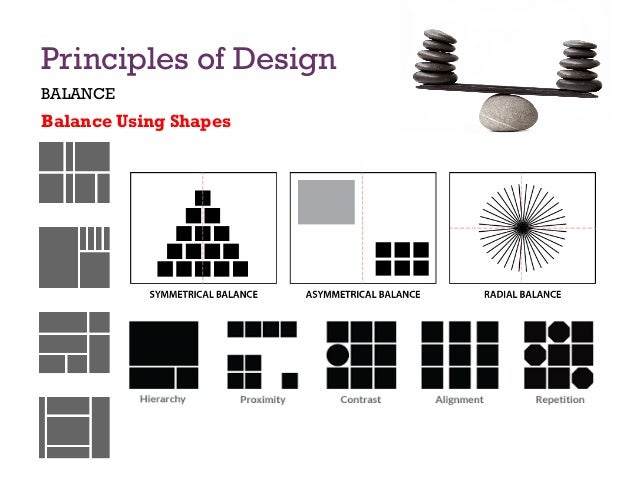
Greater visual balance could be achieved by making the columns the same length and equally distributing the images on both sides of the vertical, central axis. If you draw a vertical line right down the middle, both halves are perfectly the same. To create reflectional symmetry like this, use simple shapes and go for a minimalist logo that doesn’t have many complicated parts to it. A composition with unequal weight on both sides has asymmetrical balance. The text above the railing feels supported by the railing; however, it’s also visually balanced by the image of the boy on the right.
Feng shui: Using ancient design principles in contemporary interiors - CNN
Feng shui: Using ancient design principles in contemporary interiors.
Posted: Tue, 28 Apr 2020 07:00:00 GMT [source]
The most common way to incorporate balance into web designs is in the layout. But you can also use the float style property to position elements and balance them across the page. A very common way to balance a layout symmetrically is to center the text or other elements on the page. The position of elements on the page determines how balanced the page appears. One big challenge to achieving visual balance in web design is the fold.
Balance in design and graphic design is used to add visual weight and gravity. Balance refers to the way that visual aspects and elements are distributed within a piece. An artist or designer may use large, densely colored objects to create more gravity, or smaller, lighter-seeming objects to make a piece seem airier. Since humans naturally seek out stability and order, balance is important to creating unity or a strong piece of art or design. Balance has been used in art and design all throughout history.
It can convey messages, evoke emotions, and differentiate elements within a design. Flexiple helps you build your dream team of developers and designers. Our top handpicked developers, engineers, architects and designers. It is safe to assume that your clients have come a long way, experiencing various work from within your domain.
To balance it asymmetrically, you might have a small element farther away from the centerline. If you think of your design as being on a teeter-totter or seesaw, a lighter element can balance a heavier one by being further away from the center of gravity. You can also use color or texture to balance an asymmetrical design. Sometimes called crystallographic balance, mosaic balance is a type of organized chaos. For instance, you can have several small elements that balance out one large element.




No comments:
Post a Comment